Somewhere between "directory backlinks are the easiest SEO win available" and "directory backlinks are worthless spam" is the actual answer. It is more nuanced than either camp admits, and it changed meaningfully in 2026.
This is a practical guide to what directory listings do, what they do not do, and how to tell the two apart before you spend a weekend submitting.
The Short Answer
Directory backlinks help, but rarely for the reason people think.
Their SEO value as raw link equity is modest and declining. Their value as indexed pages that rank for your product name, send referral traffic, and get read by AI assistants is real and probably growing.
If you are submitting to directories hoping to move a competitive keyword ranking, you will be disappointed. If you are submitting to build a discoverable footprint, you will do fine.
What a Directory Listing Actually Gives You
Four distinct things, worth separating because they have very different values:
1. A backlink. Sometimes dofollow, often nofollow. This is the part everyone focuses on and the least valuable in isolation.
2. An indexed page about your product. When someone searches your product name, these pages appear. For a new product with no domain authority, a directory page may outrank your own site for your own name initially — that is not ideal, but it is better than nothing appearing.
3. Referral traffic. Small but real, and unusually high-intent from comparison directories.
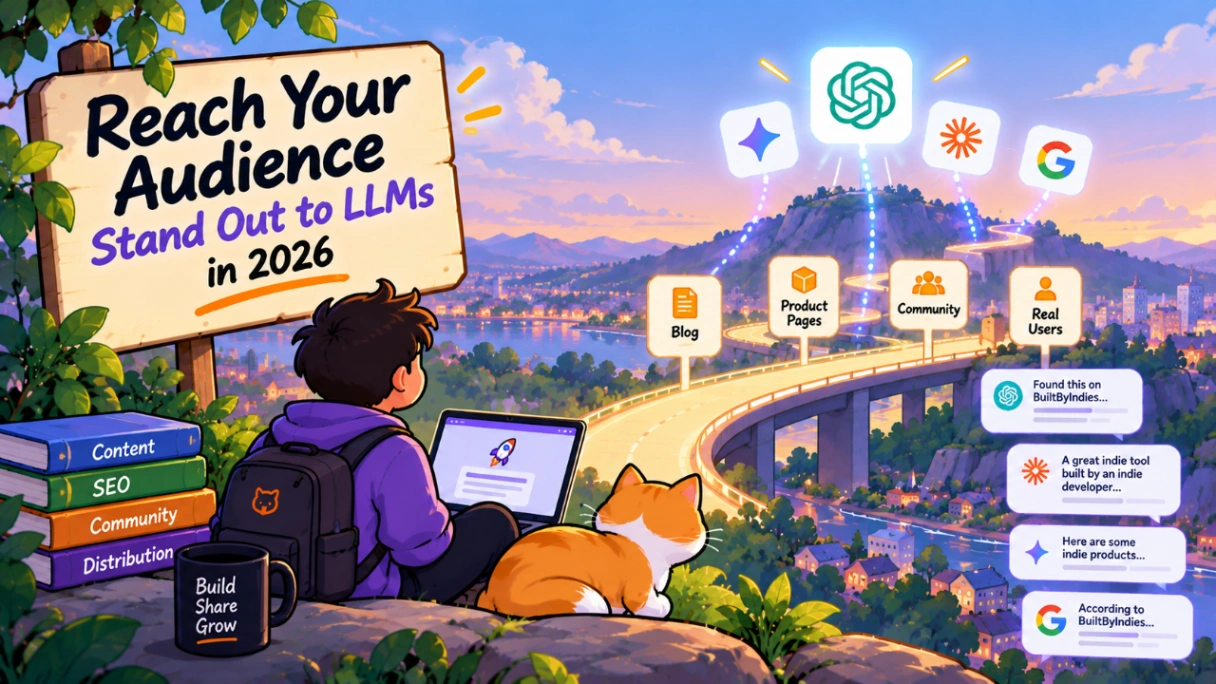
4. A citation source for AI assistants. The newest and most underrated one. When someone asks an AI for tools in your category, it retrieves from sources it already trusts — and well-established directories are exactly that.
Most guides only count the first. The other three are where the value actually is.
Dofollow vs Nofollow: What It Means for You
A dofollow link passes authority. A nofollow link tells search engines not to pass it.
Many large directories use nofollow by default. This is not them being stingy — it is how a site with thousands of outbound links avoids being treated as a link farm.
The practical guidance: never pay purely for a link. Free dofollow links are common enough (Dev Hunt, Launching Next, and others) that paying for one specifically is a poor trade. Pay for reach, placement, or speed if those are worth it to you. A paid nofollow link with no traffic behind it is just a donation.
How to Tell If a Directory Is Worth Your Time
Five checks, each taking under a minute:
Is it indexed? Search site:directory.com in Google. If very few pages are indexed, listings there will not be found either.
Do individual product pages rank? Pick a product already listed and search its name. If its directory page appears, yours will too. If not, the directory is invisible.
Is there evidence of humans? Recent submissions, comments, votes with plausible numbers. A directory whose newest listing is eight months old is an archive.
Is the link dofollow? View source on a listing and check for rel="nofollow". Not disqualifying — just worth knowing.
Is it curated at all? If literally everything gets accepted, the value of being there is close to zero, because you are in a pile with every spam submission ever made.
A directory failing three or more of these is not worth the twenty minutes.
Why Bulk Submission Services Are a Bad Deal
You will see services offering to submit your product to 100, 300, or 500 directories for a few hundred dollars. Some are legitimate businesses. The offer still does not make sense, for three reasons.
The long tail is mostly dead. Beyond the first thirty or forty directories, quality drops sharply. Most of the tail is abandoned sites that exist to host links, and search engines have had twenty years of practice identifying those.
Bad listings are worse than none. A generic submission blasted to hundreds of sites produces hundreds of identical, low-quality pages about your product. That is a pattern, and patterns are detectable.
You lose the actual value. The good part of a listing is a well-written description on a page real people visit. Automation optimises for the count, which is the least valuable variable.
Thirty considered submissions beat three hundred automated ones, and take about the same total time once you account for cleanup.
The AI Citation Angle
This is the part that has genuinely changed, and it is why directory listings are arguably more valuable now than two years ago.
When someone asks ChatGPT, Claude, or Perplexity for "best tools for X," the model retrieves from sources with structured, current information about products in that category. Comparison directories are close to ideal for this: consistent format, clear categorisation, explicit competitor relationships.
What follows from that:
Comparison directories matter more than launch boards for AI visibility. SaaSHub and AlternativeTo describe what your product is like, which is exactly what a model needs to answer a recommendation query.
Consistency across listings matters. If your product is described five different ways in five places, models produce a hedged, vague summary — or invent details. Write one description and reuse it.
Category accuracy matters more than category ambition. Listing an email tool under "AI" because AI is popular makes you less likely to be recommended for email, and you will not win AI either.
A Realistic Expectation
Here is what directory submissions look like for a new product, honestly:
Weeks 1–2: Almost nothing. Pages are being crawled. A trickle of referral traffic from the launch boards.
Month 1–2: Your product name starts returning results. Directory pages appear in search. Small ongoing referral traffic, mostly from comparison directories.
Month 3–6: The compounding shows up. Comparison pages accumulate traffic. You may start appearing in AI answers for narrow queries.
What will not happen: directory links alone will not rank you for a competitive head term. Nothing in this article changes that. Directory links are a foundation, not a strategy.
What to Do Instead of Chasing Links
If your goal is search visibility, directories are step one of three, and the smallest one.
Step one — foundation. Twenty to thirty quality directory listings. One weekend. Done once.
Step two — content. Write the specific things your users search for. This is where most of your traffic will eventually come from, and it is the step people skip because it is slower.
Step three — earned links. Publish something worth citing: original data, a genuinely useful free tool, an honest teardown. One link from a real site that chose to link you outweighs fifty directory listings.
The mistake is treating step one as the whole plan. It is the cheap, fast part you do first so that steps two and three have something to build on.
The Honest Summary
Directory backlinks are worth doing. They are cheap, mostly free, and take a weekend.
They are also not a growth strategy, and anyone selling them as one is selling something. Do the thirty good ones, write one consistent description, skip the bulk services, and then go do the harder work that actually compounds.
If you want a vetted starting list, we keep an updated one in our guide to the best startup directories, with current costs and which links are dofollow. And if you are building independently, listing on BuiltByIndies is free and permanent.