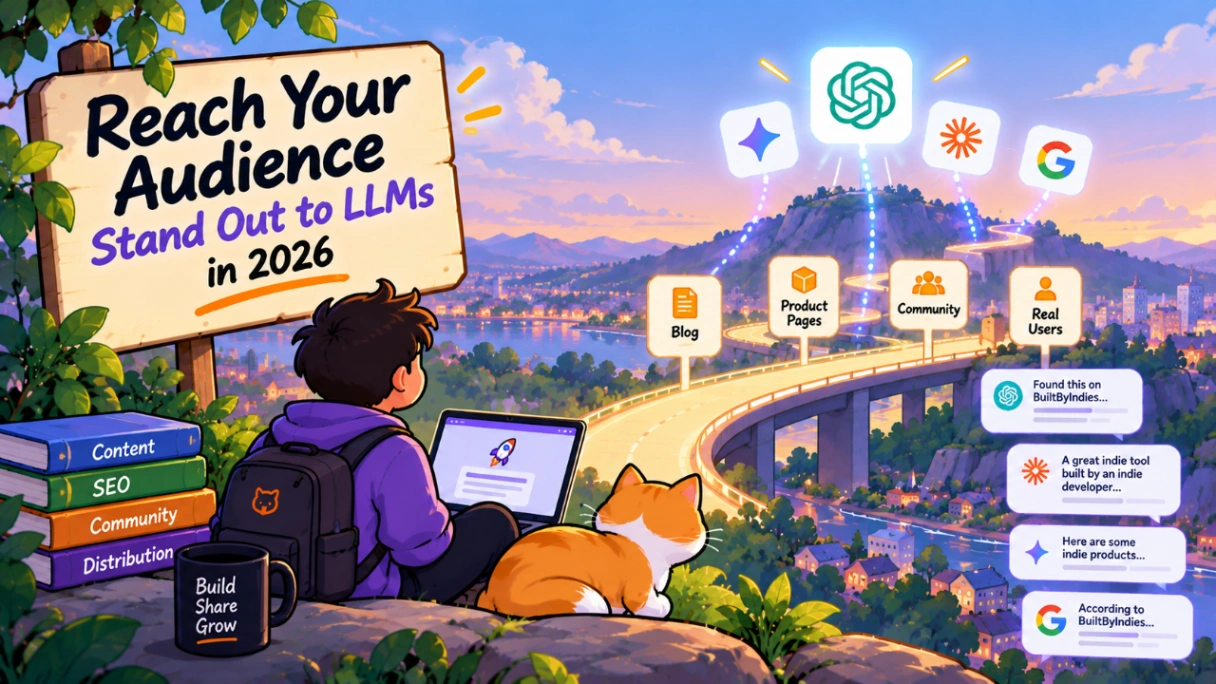
Once your product is live, the next challenge is getting people to discover it. You can post on social media, run ads, build an audience, or spend months trying to rank on Google.
But there is another strategy that many founders overlook: submitting your startup to startup directories.
Directories give your product another discoverable page on the internet, a backlink to your site, and a steady trickle of referral traffic long after launch day is over.
The catch is that the directory landscape changed a lot in 2026. Several platforms that used to be free now charge. Others have waiting lines measured in months. A guide that tells you to "just submit to Uneed for free" is describing a website that no longer exists.
This guide covers 25 directories that are still worth your time, what each one actually costs today, and the order we would submit in.
What Is a Startup Directory?
A startup directory is a website where founders can list their startups, SaaS products, apps, tools, or online businesses.
Instead of relying entirely on your own website to attract visitors, directories give your product another indexed page pointing back at you.
A good directory can provide:
Exposure to potential customers
Backlinks to your website
Referral traffic
Search engine visibility
Social proof for your landing page
Connections with other founders
However, not every directory is equally valuable. Some have large communities, while others are mainly useful for SEO and backlinks.
Dofollow vs Nofollow: The Part Most Guides Skip
Before you spend a weekend submitting, it helps to know what you are actually buying.
A dofollow link passes SEO authority from the directory to your site. A nofollow link does not, at least not directly. Many large directories use nofollow links by default.
This does not make nofollow listings worthless. They still send real humans to your site, they still show up when someone searches your product name, and they still get read by AI assistants answering questions about tools in your category. But if your main goal is domain authority, it is worth knowing which is which before you pay for a listing.
A reasonable rule: pay for reach and traffic, not for links. Free dofollow links are common enough that paying purely for one is rarely a good trade.
The 25 Best Startup Directories in 2026
Here is the shortlist, with what each one costs at the time of writing.
| Directory | Model | Cost | Best for |
|---|---|---|---|
| Product Hunt | Daily leaderboard | Free | Ready-to-launch products with an audience |
| Hacker News (Show HN) | Community post | Free | Technical products and developer tools |
| Peerlist Launchpad | Weekly launch | Free | Makers with a Peerlist profile |
| BuiltByIndies | Ongoing listing + community | Free | Indie makers and bootstrapped products |
| Fazier | Daily board | Free with backlink, $29+ paid | Extra launch-day visibility |
| MicroLaunch | Daily board | Free, $39+ paid | Small products and side projects |
| Uneed | Daily board | $14.99–$29.99 | Founders who want a fixed launch date |
| BetaList | Curated, pre-launch | Free (4–6 wks), ~$29 expedited | Unlaunched products seeking beta users |
| Dev Hunt | Weekly board | Free | Developer tools |
| Launching Next | Permanent listing | Free, $99 expedited | Long-term indexed listing |
| SaaSHub | Comparison directory | Free | SaaS with clear competitors |
| AlternativeTo | Comparison directory | Free | Products positioned as an alternative |
| Startup Stash | Curated resource list | Free (nofollow) | Founder-facing tools |
| StartupBase | Directory + community | Free | Early-stage startups |
| Indie Hackers | Community | Free | Revenue stories and build-in-public |
| r/SideProject | Community | Free | Honest early feedback |
| r/indiehackers | Community | Free | Founder discussion |
| Tiny Startups | Weekly board | Free | Small launches |
| OpenHunts | Extended-visibility board | Free | Avoiding the 24-hour cliff |
| There's An AI For That | Niche directory | Free + paid tiers | AI products |
| Futurepedia | Niche directory | Free + paid tiers | AI products |
| G2 | Review platform | Free listing | B2B SaaS chasing buyer intent |
| Capterra | Review platform | Free listing | B2B SaaS |
| F6S | Startup database | Free | Fundraising-stage startups |
| Crunchbase | Company database | Free tier | Brand-name searches and credibility |
1. Product Hunt
Still the largest launch platform, and still the one with the highest ceiling and the highest variance.
A strong Product Hunt day can send thousands of visitors and produce a backlink that keeps working for years. A weak one can send a few dozen. The difference is almost never the product — it is whether you arrived with an audience already willing to show up in the first few hours.
Best for: products that are genuinely ready for the public, with a founder who can be present all day to answer comments.
2. Hacker News (Show HN)
Not a directory, but for technical products it can outperform every directory on this list combined. A Show HN post that reaches the front page can send tens of thousands of visitors in 48 hours.
The trade is that the comment section is unusually direct. Write like an engineer explaining a problem, not like a marketer describing features, and treat the criticism as free user research.
3. Peerlist Launchpad
Launches open weekly rather than daily, so your product stays visible for the whole week rather than a single day. Anyone with a verified Peerlist profile can launch, and it is free.
The audience skews toward developers and designers, which makes it a good fit if that is who you are building for.
4. BuiltByIndies
We build BuiltByIndies, so treat this entry with the appropriate amount of salt.
It is a discovery platform and community for products built by independent makers. Rather than a single launch day, products keep a permanent page, and the build log and stories sections let you post progress over time so there is a reason for people to come back.
Best for: indie hackers, solo founders, and bootstrapped SaaS. Less good for: funded startups looking for press coverage, which is not what the audience is there for.
5. Fazier
A daily discovery board in the Product Hunt mould. Free submissions require a backlink to Fazier and can take up to 30 days to be reviewed. Paid listings start around $29 and remove the wait; the higher tier drops the backlink requirement and lets you pick your date.
6. MicroLaunch
Free submission with community voting and feedback, with paid options starting around $39. Aimed squarely at smaller products, which means less competition for attention than the big boards.
7. Uneed
Worth flagging clearly, because most guides have this wrong: Uneed closed its free waiting line in August 2026 after the queue stretched past six months. It is now paid only — roughly $14.99 to fast-track to a slot about two weeks out, or about $29.99 to name your exact date.
Still a solid platform. Just not a free one anymore.
8. BetaList
BetaList only features products that have not publicly launched yet, which makes it the one platform here you can miss your chance at. The free review queue runs about four to six weeks; a paid expedite (around $29) gets you reviewed in roughly a day.
Best for: collecting beta signups and validating before a bigger launch.
9. Dev Hunt
Free to list, with a free dofollow link, and focused entirely on developer tools. Niche directories like this often outperform large general ones because the audience is exactly who you want.
10. Launching Next
A curated directory offering a free, permanent, dofollow listing. There is a $99 upgrade for one-business-day review, but the free queue works fine if you are not in a hurry.
The value here is longevity — the page stays indexed indefinitely, which is worth more over two years than a single day on a busier board.
11. SaaSHub and 12. AlternativeTo
These two work differently from launch boards, and they are the most underrated entries on this list.
Both are comparison directories. People arrive already searching for "alternative to [expensive tool]" — which is to say, they arrive with intent to switch. If your product is a credible alternative to something established, these pages can send qualified traffic for years with no launch day required.
Position yourself honestly against a real competitor and you will do well. Claim to be an alternative to something you are not and the community will correct you.
13. Startup Stash
A curated directory of founder tools with a strong domain rating. The links are nofollow, so treat it as an exposure play rather than an SEO one.
14–17. The Communities
StartupBase, Indie Hackers, r/SideProject (~628K members), and r/indiehackers (~100K members) are not directories, but they are where the people you want actually spend time.
The rule for all four: participate for a few weeks before you post your own launch. Communities are reliably good at spotting an account that showed up only to promote something, and reliably unkind about it.
18–19. Tiny Startups and OpenHunts
Both free, both built around the complaint that products get buried after 24 hours on the big boards. Lower traffic, but longer visibility windows.
20–21. AI Directories
If you have built an AI product, There's An AI For That and Futurepedia are the two with real search traffic behind them. Both have free tiers and paid placements. Skip these entirely if your product is not AI — a bad category fit helps nobody.
22–25. Review Platforms and Databases
G2, Capterra, F6S, and Crunchbase are slower plays. They will not send you traffic next week. But for B2B products, G2 and Capterra catch buyers at the moment they are comparing options with a budget, and a Crunchbase profile makes your company look real when someone searches your name.
Worth 20 minutes each. Not worth optimizing.
The Order We Would Submit In
Submitting everywhere on the same day is the most common mistake. You get one burst of scattered traffic, no compounding, and no ability to tell what worked.
A better sequence:
Before you launch: BetaList, if the product is genuinely not public yet. This is the only one with a deadline you can miss.
Week 1: Pick one primary launch. Product Hunt if you have an audience to mobilize, Peerlist or Fazier if you do not. Do not split your attention across two big boards on the same day.
Week 2: The permanent listings — Launching Next, BuiltByIndies, StartupBase, Dev Hunt if relevant. These are not time-sensitive, so they are the right thing to do while your launch week traffic settles.
Week 3: The comparison directories. SaaSHub and AlternativeTo take longer to write well because you need to think carefully about positioning, and they are worth the extra effort.
Week 4 and ongoing: Communities. Show HN when you have something technically interesting to say, Reddit when you can frame it as a question rather than an announcement.
Spreading submissions over a month also gives you something a single-day blitz cannot: a readable signal about which platforms actually sent you users.
How to Get More Value From Each Submission
Do not paste the same description everywhere. Prepare a submission package once and adapt it:
1. A clear one-line description
What your product does, in one sentence, without adjectives. This is the single highest-leverage thing you will write.
2. A strong product description
The problem, who it is for, and why it is different. Two short paragraphs beats one long one.
3. Screenshots
Show the product doing its actual job, not your login screen or your pricing page.
4. Your website URL
Point it at a page that matches what the listing promised. Sending directory traffic to a generic homepage wastes the click.
5. Social profiles
So people can follow your progress after they leave.
6. A launch story
People do not only want to see what you built. They want to know why you built it. Founders consistently underestimate this, and it is often the part that gets shared.
But Don't Submit Everywhere
More directories do not automatically mean better results. There are services that will submit you to 100+ directories for a few hundred dollars, and for most founders that money is better spent elsewhere.
Focus on directories that are:
Relevant to your product and audience
Actually indexed by search engines
Used by real people, not just crawlers
Capable of sending referral traffic
Giving you a product page worth linking to
Twenty-five thoughtful submissions will outperform two hundred automated ones, and they will not leave your product sitting on a hundred abandoned pages that Google has learned to ignore.
Directories Are Not an SEO Strategy On Their Own
Directory listings help. They are also not sufficient.
The listings give you indexed pages, referral traffic, and a set of citations that AI assistants increasingly read when someone asks for tool recommendations in your category. What they do not give you is a reason for anyone to link to you.
The strongest version combines all of it: your own site, genuinely useful content, directory listings, and an actual community presence — rather than betting everything on any single channel.
Final Thoughts
Getting your first users is difficult, and no single launch is going to solve it.
What works better is building several doors into your product and keeping them open. Submit to the directories that fit, participate honestly in the communities where your users already are, publish things worth reading, and keep improving the product.
The goal is not to be listed everywhere. It is to build a distribution system where your product keeps getting discovered long after launch day is over.